
Clinic for Implant
&
Orthodontic Dentistry, procedures explained, offers, information,
Fixed Retainers: What They Are, How Long They Last, and How to Care for Them (Worthing)
A fixed retainer (also called a bonded or permanent retainer) is a thin wire that is attached to the back of your front teeth after orthodontic treatment. Its job is simple: help stop teeth drifting back out of alignment over time.
At Clinic for Implant & Orthodontic Dentistry in Worthing, we regularly fit, repair and replace fixed retainers, and we also advise on the best long-term retention plan (often a fixed retainer plus a removable retainer at night).
Why do I need a retainer after braces?
Teeth naturally want to move throughout life. After orthodontic treatment, the fibers and bone around the teeth take time to stabilise, and even years later teeth can drift slightly.
A retainer helps maintain the result you invested in. In many cases, long-term (often indefinite) retention is recommended — especially for the lower front teeth, which commonly relapse.

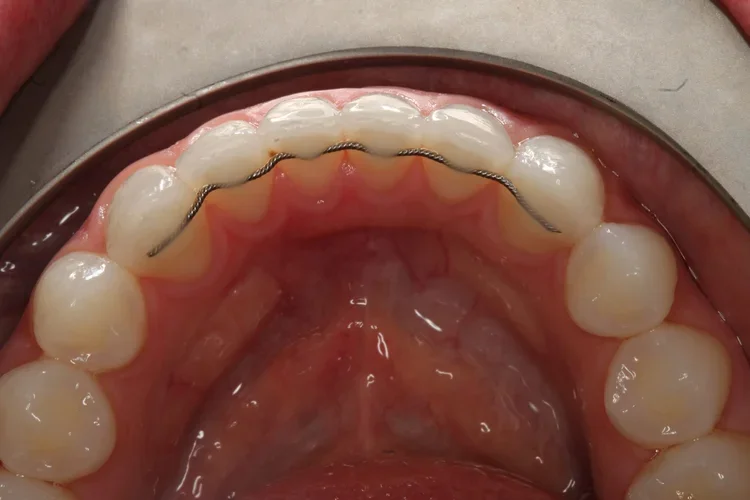
An example of a fixed retainer before fitting
What is a fixed retainer?
A fixed retainer is usually a smooth wire bonded behind the front teeth (commonly canine-to-canine). It is not visible when you smile and doesn’t need to be removed.
Common types:
Straight wire bonded to several teeth
Braided wire (more flexible)
Bonded to each tooth with small composite “pads”
The best design depends on your bite, tooth shape, hygiene ability, and whether you grind your teeth.
Pros and cons of fixed retainers:
Benefits:
Works 24/7 (no forgetting to wear it)
Discreet (hidden behind the teeth)
Excellent at preventing front-tooth drift
Possible downsides:
Cleaning requires more effort (you must clean between teeth carefully)
The wire or bonding can occasionally come loose
Calculus/tartar can build up faster if cleaning isn’t thorough
With good hygiene and regular maintenance, most patients do very well with fixed retainers.
How long do fixed retainers last?
Fixed retainers can last many years, but they are not “fit and forget”. Longevity depends on:
Your bite (heavy bite can stress the wire)
Teeth grinding/clenching
Diet habits (hard foods can dislodge bonding)
Oral hygiene and professional cleaning
Some retainers last 10+ years; others need repair sooner. The key is to catch problems early.
Signs your fixed retainer needs attention
Contact us if you notice:
The wire feels sharp or “lifted”
One part is loose, even slightly
A tooth feels like it’s starting to move
Floss keeps shredding or getting stuck
You can see the bonding has chipped or cracked
A small issue is usually quick to fix. Leaving it can allow teeth to drift.
How to clean around a fixed retainer?
Good cleaning is essential to prevent gum inflammation and tartar build-up.
Daily tips
Brush twice daily with fluoride toothpaste
Use interdental brushes (often the easiest option)
Use superfloss or a floss threader to clean under the wire
Consider a water flosser as an extra tool (not a replacement for brushing)
Professional hygiene
If you have a fixed retainer, regular hygiene appointments help keep the gumline healthy and reduce tartar around the wire.
Fixed retainer repair: what happens?
If a retainer comes loose, we first check:
Which tooth/teeth are affected
Whether any teeth have already shifted
Your bite, to reduce the risk of repeat breakage
Repair options
Re-bond the loose section (common and quick)
Replace the wire if it’s distorted or repeatedly failing
Adjust the retainer design if bite forces are causing issues
If teeth have moved, we’ll discuss the best way to regain alignment (sometimes minor orthodontic refinement is needed, but often it can be avoided if caught early).
Frequently asked questions:
Can a fixed retainer break without me noticing? Yes. Sometimes a small bond fails but the wire stays in place. That’s why regular checks (and paying attention to flossing changes) are important.
Should I still wear a removable retainer? Often, yes — especially at night. Many orthodontic plans use both for the most stable long-term result.
Does removing a fixed retainer hurt? No. Removal is usually straightforward and we clean/polish the tooth surface afterwards.
What foods should I avoid? Very hard foods (biting into crusty bread, nuts, ice, hard sweets) can increase the chance of breakage.
Can I have a fixed retainer if I grind my teeth? Yes, but you may also need a night guard, and we may recommend a retainer design that tolerates higher forces.
Book a retainer check or repair in Worthing
If your fixed retainer is loose, uncomfortable, or you’re worried your teeth are moving, contact Clinic for Implant & Orthodontic Dentistry in Worthing. We can assess the retainer, advise on the best retention plan, and repair or replace it where needed.