
Clinic for Implant
&
Orthodontic Dentistry, procedures explained, offers, information,
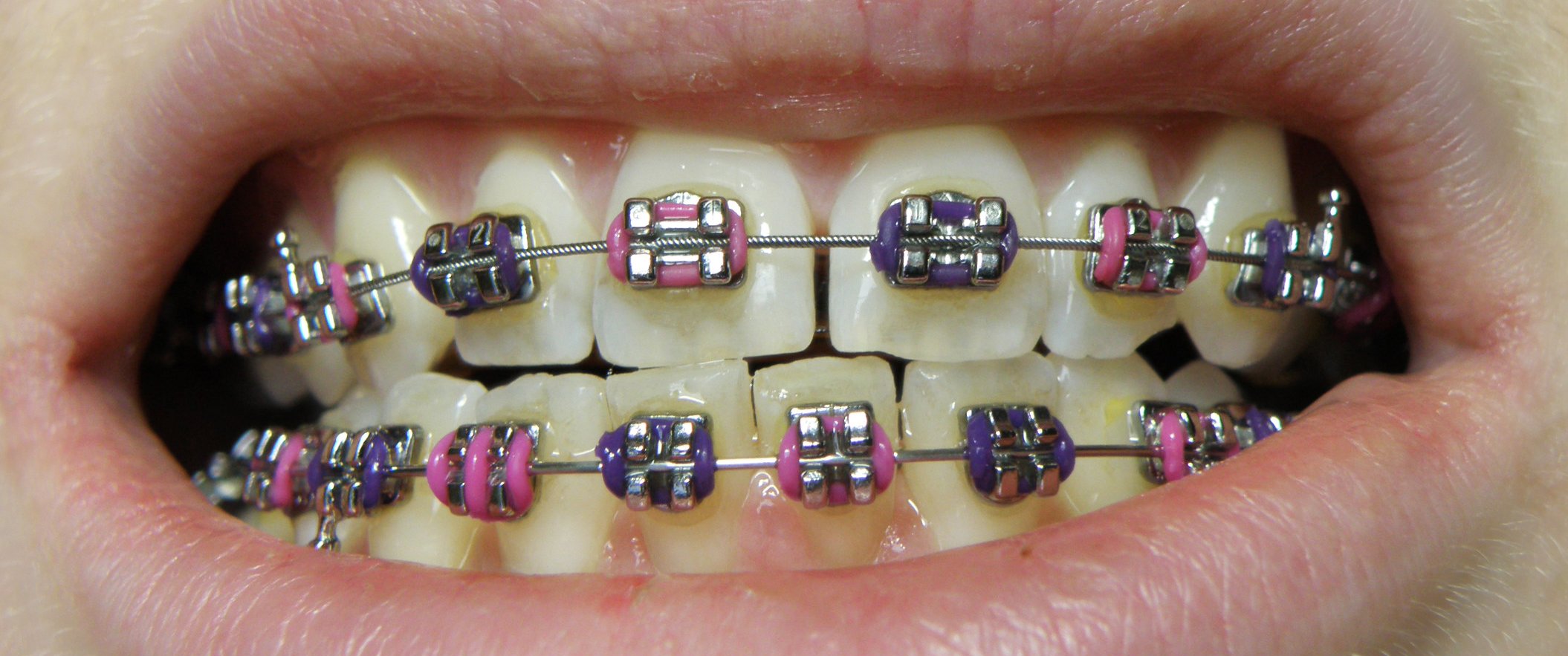
What is orthodontic Treatment?- By Dr Amir Mostofi DDS, Dip. MSc
Orthodontics involves realigning and straightening the teeth and jaw to improve one's smile and oral health.
Treatments are available to repair gaps between teeth, straighten crooked teeth, and fix an uneven bite. In order to complete this process, braces are used. These are attached to the inside of the mouth for a predetermined amount of time. Retainers are then worn following the end of treatment.
Although orthodontic procedures are frequently carried out for cosmetic purposes, they can also enhance tooth health over the long run. Fixing misaligned teeth that do not fit together is crucial because they are more difficult to keep clean and are consequently more prone to gum disease or tooth decay.
Fixed metal braces and removable clear aligners are just two of the many variations of braces. Here is a summary of the various orthodontic procedures that are offered:
Orthodontics involves realigning and straightening the teeth and jaw to improve one's smile and oral health.
Treatments are available to repair gaps between teeth, straighten crooked teeth, and fix an uneven bite. In order to complete this process, braces are used. These are attached to the inside of the mouth for a predetermined amount of time. Retainers are then worn following the end of treatment.
Although orthodontic procedures are frequently carried out for cosmetic purposes, they can also enhance tooth health over the long run. Fixing misaligned teeth that do not fit together is crucial because they are more difficult to keep clean and are consequently more prone to gum disease or tooth decay.
Fixed metal braces and removable clear aligners are just two of the many variations of braces. Here is a summary of the various orthodontic procedures that are offered:
Invisible braces
Modern technology has made it possible to create almost undetectable braces, allowing patients to straighten their teeth more covertly.
There are several varieties of these very undetectable braces:
Lingual brackets (Lingual orthdontics)
In order to correct your teeth, lingual braces are discreetly positioned against the inside surfaces of your teeth. There are several kinds based on your requirements. Some of them are made specifically to align just your front six to eight teeth. Only your orthodontist can remove these braces when the course of treatment is complete.
Ceramic (white coloured) brackets
These, also referred to as ceramic braces, have a more discrete appearance than standard metal braces thanks to the use of clear or tooth-colored brackets. Clear braces straighten teeth in about 18 to 24 months, just as conventional orthodontic therapy.
Cosmetic adjusting
Contrary to braces, treatment just straightens the front six to eight teeth that are most noticeable. Cosmetic straightening, which takes a more focused approach, uses procedures that are significantly more covert than metal braces to provide results in as little as six months. In fact, a large number of the selections are hardly visible.
The conventional fixed bracing
Due to their effectiveness and dependability, fixed metal braces continue to be a common choice for straightening teeth, especially among teens, although many adults also use fixed braces. With the help of a wire connecting the brackets on the braces, which are glued to the teeth, the teeth are gradually pulled into alignment.
braces that self-ligate
These resemble standard metal braces in appearance, but they use spring clips to attach the wire rather than elastic bands, which decreases friction between the bracket and the wire. Because they are simpler to maintain and permit more tooth movement, these braces are less likely to discolour and may cause less discomfort.
A retainer is what?
Although technically not an orthodontic procedure, retainers are an essential component of the maintenance required to properly achieve straighter teeth. After your braces have done their magic, you will need to wear a retainer to prevent your teeth from trying to return to their unattractive shape.
It takes some time for the gum's elastic fibres to realign themselves around each tooth's new position and cease tugging them out of alignment. Retainers are crucial up until the point that the teeth have stabilized for this reason. In reality, retainers should be worn permanently to ensure that teeth stay in place.
Removable retainer
These have the appearance of a thin, transparent gum shield that is moulded to your teeth to keep them in alignment and for comfort. Patients will need to wear retainers for varying amounts of time, but for the majority, only at night.
Fixed retainer
In these, the retainer is held in place by a stainless-steel wire that is bonded behind the front teeth. You just need to be cautious when brushing your teeth while wearing them because they are incredibly discreet and simple to completely forget about.
The best thing to do is to talk to your dentist if you're curious to learn more about braces and orthodontic therapy.
If you are interested in knowing about your orthodontic treatment options, please do not hesitate to contact the Clinic for Implant & Orthodontic Dentistry on 01903 821822.
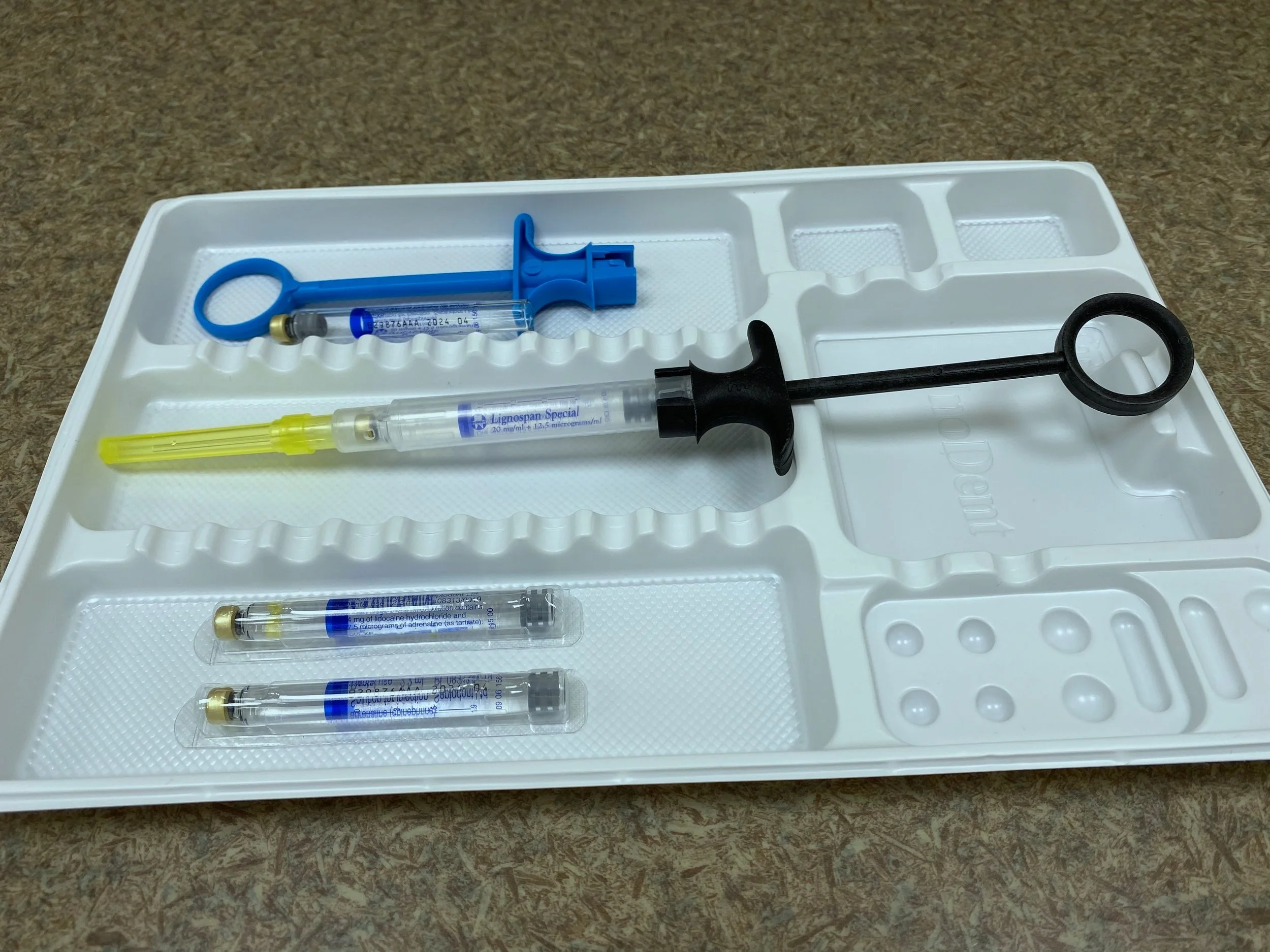
What to do following a surgical tooth extraction?- By Dr Amir Mostofi DDS, Dip. MSc
Post-operative advice following tooth extraction
Post operative instructions following surgical tooth extraction.
In order to minimize the risk for infection, pain, swelling and to aid healing please follow the advice provided here.
Following the surgery you may have minor discomfort. However, if you feel that it is too much then contact your dental practice. Do not disturb the surgical side—this refers to playing with the area using your tongue. If you feel the need, take painkillers and refer to our advice regarding how to take them.
Smoking:
Smoking is prohibited following an extraction as it reduces the blood flow to the area, increases the risk for infection and delays healing.
Sutures:
If you have dissolvable sutures (your dentist would have informed you of this) then they should dissolve on their own within 3-4 weeks. However, sometimes if you are taking antibiotics they may not dissolve on their own. If they are bothering you go your dentist practice after around 2 weeks and the dentist will remove them for you.
If you have non-dissolvable sutures then you will need to come back in 2-3 weeks to have them removed by the dentist.
PAINKILLERS
There are two types of painkillers (over the counter) that can be taken following a tooth extraction. If it is required, they can both be taken up to their maximum doses together. They can be taken together due to the fact that they are two completely different types of drugs. You must take what you would usually take for a headache and consult the leaflet, a GP or pharmacist for any interference with your current medication.
Ibuprofen:
You can take up to 1600mg of ibuprofen per day. This works out to be 2 x 200mg tablets being taken 4 times a day, and this can be done for up to a week.
Paracetamol:
You can take up to 2500mg per day. This works out to be 1 x 500mg tablet 5 times a day for a week.
You must wait between 4 to 6 hours between doses on both medications. If you stagger the medication, then you may find it more effective.
You should notice a noticeable improvement after a week. If you feel that you are still in a lot of pain after a week, contact your dentist.
Antibiotics:
If you have been given antibiotics, read the following advice.
Do not stop taking the antibiotics until the end of the course or unless a professional tells you to stop. You should notify the dentist if you are allergic to any of these medications before you begin taking them.
Amoxicillin is to be taken once every eight hours.
Metronidazole is to be taken once every eight hours. Contact your dentist if you are taking warfarin regarding this drug.
Erythromycin is to be taken once every 6 hours . To reduce side effects, it is recommended to have natural, live yoghurt.
Brushing:
Brushing should be done as usual, but try to avoid the surgical side for the next few days. If there are sutures, please be careful not to damage the sutures.
Mouthwash:
It is recommended that for the first week following extraction, you rinse with a disinfectant mouth wash. Any antibacterial mouth wash is OK, but there are two main ones that we recommend. Do not rinse too violently as it will disturb the healing
Corsodyl is best used for 10 seconds twice a day. Do not use it for longer than one week. If used for longer than one week, it is likely to cause discoloration of the teeth.
Listerine is best used for 10 seconds twice a day.
Bleeding:
Following a tooth extraction, patients should expect some bleeding. Expect a little bit more bleeding if you use blood thinners or if you have more complicated procedures like implants or surgical extractions.
However, you should not have excessive bleeding . If you experience excessive bleeding, then roll a tissue or gauze in the shape of a sausage and then bite on it gently for 20 minutes. If you have sutures, DO NOT do this, as it can irritate the area more. Contact your practice ASAP.
Bruising:
Following more extensive surgeries like implants or surgical extractions, bruising and swelling may appear. This should start to disappear within a week or 10 days. Anti-inflammatory painkillers such as ibuprofen will aid a faster recovery. This bruising and swelling may last slightly longer in some patients.

What is an overdenture?- By Dr Amir Mostofi DDS, Dip. MSc
An overdenture is a cheaper removable substitute for a full jaw fixed implant treatment. A denture with one or more teeth, prepared roots, or implants covered at the base is known as an overdenture. Any removable dental prosthesis known as an overdenture is one that covers and rests on one or more natural teeth that are still present, their roots, and/or dental implants. Overdentures can be implant- or conventionally tooth-supported. Alveolar bone is found to be preserved and the process of total edentulism is postponed. For senior individuals who have lost some teeth but not all, making them qualified for a set of full dentures, an overdenture is typically employed. The overdenture is detachable and not fixed in the mouth. Overdentures have the advantage over complete dentures in that the roots that are still in the maxilla (upper jaw) or mandible (lower jaw) protect the top or lower jaw's bone, reducing bone resorption.
Implants may support an upper or lower overdenture.
The most frequent number of implants used to stabilise an upper denture is 4, despite the fact that there is little evidence to conclusively demonstrate the appropriate number of implants for stabilising an upper overdenture.
Support for a mandibular overdenture was improved when two implants were present rather than just one implant.
The patients could also chew much better and was overall more pleased with the overdenture.
Sometimes a metal bar connecting implants will enhance retention of an overdenture.
The patient's overall satisfaction with the overdenture increased along with how much better they could chew. Initially chewing abilities are decreased, however when the overdenture has been fitted for a year, the chewing cycle improves.
Very Important advice for all implant patients. By Dr Amir Mostofi DDS, Dip. MSc
Following your implant surgery, ask for a written copy of your implant details. It should include brand, model and specific details like diameter and implant connection type. Keep these details somewhere safe for a very long time. The reason for that is it makes it much more easier for another dentist 10-20 years later to unscrew the prosthesis above the implant and use the implant base (in jaw bone) for something else. Do not trust that the clinic will always retain a copy of your implant details as accidents happen, dental practices shut down and clinical notes could become lost and sometimes clinical notes are not very clear. It is very difficult and almost impossible for a new dentist to guess what specific type of implant has been used in your mouth.

When not to have full jaw implants?- By Dr Amir Mostofi DDS, Dip. MSc
The reasons that follow are the most common, however each case should be considered by a qualified implant dentist.
- Heavy smokers.
- Patients with severe bruxism (grinding teeth).
- Individuals taking bone loss prohibitory medications (like bisphosphonates for osteoporosis).
- Patients unable to perform routine brushing procedure.
- Patients with severe and long term systemic illness like diabetes, which might affect the healing following surgery.
- Radiation (to the jaws) & chemo therapy.
- Patients with cognitive decline (memory, speech, motoric, judgment and thinking).
- Very advanced age.
- Bleeding disorders.
- Bone disease.
- Severe psychiatric disorder.

How long to wait following an extraction for a implant placement?- By Dr Amir Mostofi DDS, Dip. MSc
How long following an extraction should you wait before having an implant placement to fill the gap? After an extraction, the timing of implant treatment depends on healing, available bone and the individual clinical situation. Learn more about dental implants in Worthing and what an assessment involves. In reality on the same visit you can have an implant inserted, but such approach is not always possible. The reason could be because there are not enough bone in the extraction socket to support a new implant, or severe infection in the site. However, if you wait too long following an extraction, the jaw bone in extraction socket will start shrinking and you have less bone in extraction site. Numerous studies have been carried out to find out the optimum waiting time prior to an implant placement in an extraction site. It appears that optimum time is between 8 to 12 weeks following extraction for a new implant placement.


Root canal or implant , which one is better?- By Dr Amir Mostofi DDS, Dip. MSc
Many people some times come to a point when they should choose between an option of root canal treatment or perhaps option of extraction of a tooth and later replacing the missing tooth by an implant. The question is which one is a better, more long lasting, less trouble some and cheaper option? Like many times in life there is no straight forward and easy answer to this, however, I try to out line the main differences in here.
First point that a lot patients ask me, is how long each one lost? The life span of an implant depends on many different factors but the most important factor is place in the mouth where an implant is inserted.
Many people some times come to a point when they should choose between an option of root canal treatment or perhaps option of extraction of a tooth and later replacing the missing tooth by an implant. The question is which one is a better, more long lasting, less trouble some and cheaper option? Like many times in life there is no straight forward and easy answer to this, however, I try to out line the main differences in here.
First point that a lot patients ask me, is how long each one lost? The life span of an implant depends on many different factors but the most important factor is place in the mouth where an implant is inserted. Usually implants at upper or lower front part of a mouth last longest and implants at upper molar region last less. There are several studies that shows 85% - 95% of implants survive up to 15 years. The survival rate for root canals is also dependent on a tooth position in mouth. Front teeth as they have less number of roots are more successful than molar teeth. On average 90% of root canal treatments are successful in a 15 year period.
From a cost point of view a root canal with a restoration at the top , cost less in comparative to an extraction plus implant and a crown at the top of implant.
Time wise a root canal with restoration is completed in much shorter time compare to extraction , waiting for healing period, implant insertion, waiting for implant integration with bone and later fitting a crown at the top of implant.
As a general rule my first recommendation to our patients is a root canal. However, there are cases where performing a root canal is not a good option and considering for an implant becomes a better choice.

Making Dentistry Affordable - Payment Plans
Want high quality dental treatment but are worried about the costs?
If so then look no further because we have payment plans to help suit you! We have interest free finance for those one offs either over 6 or 10 months. We also have a denplan payment plan which is a monthly payment plan for longer term planning.
Our plans are easy to sign up for and our higly trained nurses/recepton can tell you more information and guide you through the application process.
No more NHS dental treatment. You can finally afford that high quality private treatment you've always wanted. We can finance all of our treatments such as the following.
Want high quality dental treatment but are worried about the costs?
If so then look no further because we have payment plans to help suit you! We have interest free finance for those one offs either over 6 or 10 months. We also have a denplan payment plan which is a monthly payment plan for longer term planning.
Our plans are easy to sign up for and our higly trained nurses/recepton can tell you more information and guide you through the application process.
No more NHS dental treatment. You can finally afford that high quality private treatment you've always wanted. We can finance all of our treatments such as the following.
- Implants
- Dentures
- Fillings
- Crowns
- Bridges
- Teeth Whitening
- Home Visits
- Extractions
- Root Canal Treatments

Dementia Awareness - Dementia Friendly Dental Practice
Dementia awareness among dentistry is becoming increasingly important. Therefore, we as a surgery have decided to take the necessary steps to work towards being a dementia friendly practice.
We are doing this by:
- Joining the Alzheimers Societies Dementia Awareness programme - Meaning we are Dementia Friends
- We have conducted an audit to look for any shortcomings in the way we run our practice
- We have an action plan to move foward
- We are looking into joining Worthings Dementia Action Alliance
- We have had recent training in how dementia affects people
- We will continue to update on how we have improved our practice to aid people with dementia and their carers/family members feel more comfortable while they are with us.
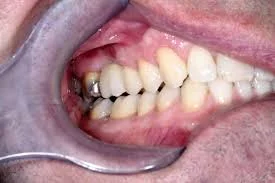
Implant Procedure - Final Step - Fitting the Crown
This is the final step of the procedure.
A few weeks after the impressions usually about 2 weeks you will be asked to come back to have the final fit of the crown. During this appointment the clinician will try in the crown or bridge that has been sent back from the laboratory. They will initially just try it in and ensure it doesn't need any major changes. If they are happy with that then they will proceed to either cement retain the crown or to screw it in to permenantly place it.
The clinician will then check the bite and ensure that you are fully happy with it. Once everyone is satisfied you will be then finished.

GDPR
As many of you are probably aware. The new GDPR regulation came into affect as of today. It means that it will affect the way that we can process any data that we have of patients. Please have a read of our Cookie Policy, Privacy Policy and Fair Processing Notice before you coninue on our website.
Thank you for you co-operation.

Implant Procedure - Step 3 - Taking Impressions
This is the stage that will begin the procedure for making the crown to finish the implant.
Firstly, the implantologist will select an impression tray that matches your personal mouth size so it is the most comfortable.
Following this, the implantologist will place a special abutment into the implant which the impression will go round and show the laboratory exactly how the implant has been placed and give them a good idea on how to make the crown.
Then, they will have their nurse mix the impression material and place it into the tray. The nurse will then pass that to the implantologist and place it into your mouth. This is uncomfortable for many patients but the best thing to do is just breathe through your nose and focus on your breathing and not whats going on.
After this, they will unscrew the abutment so that the impression comes out. They will then send this to a laboratory where they will make the crown to fit on your implant.
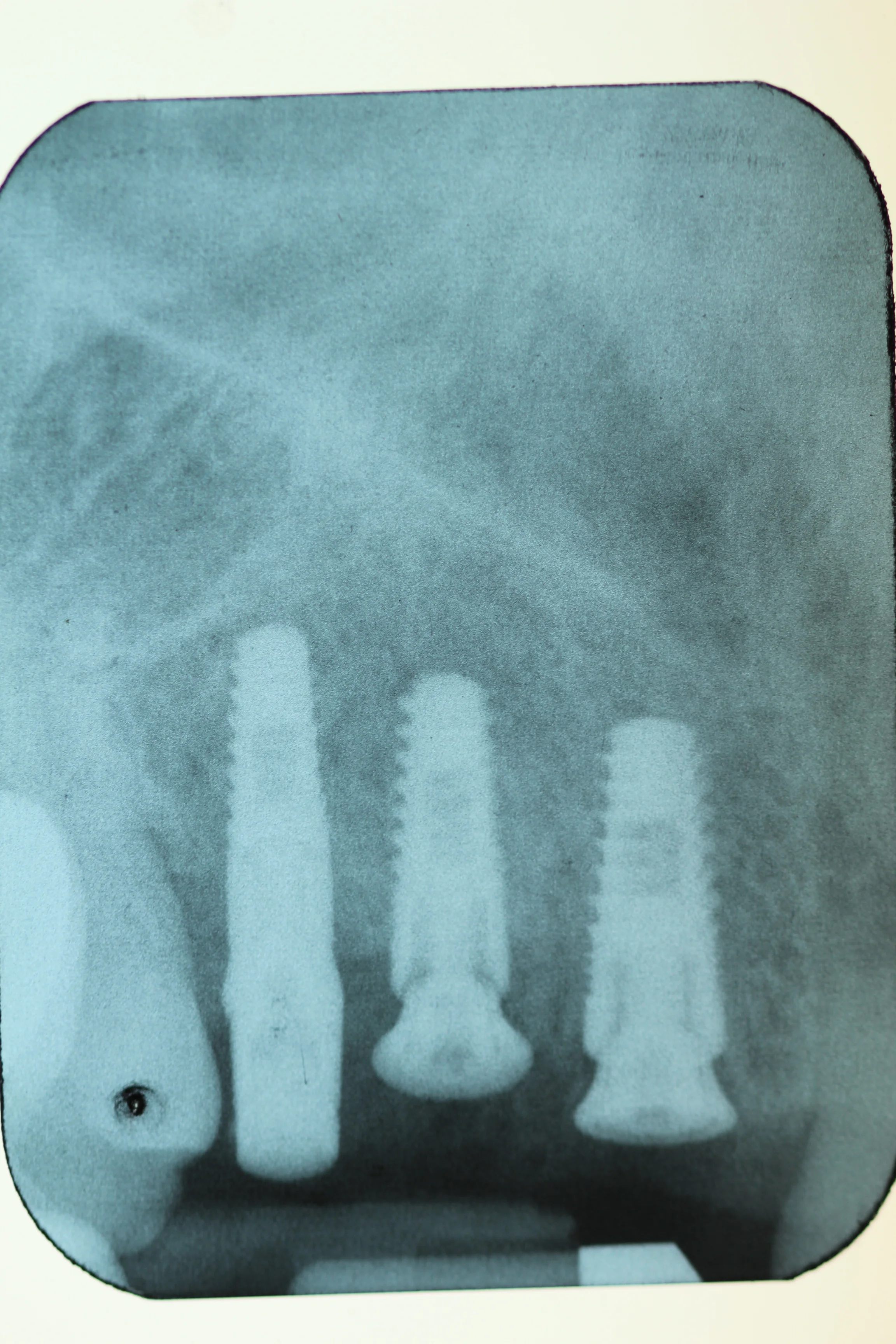
Implant Procedure Step 2 - Placing the implant - Part 2
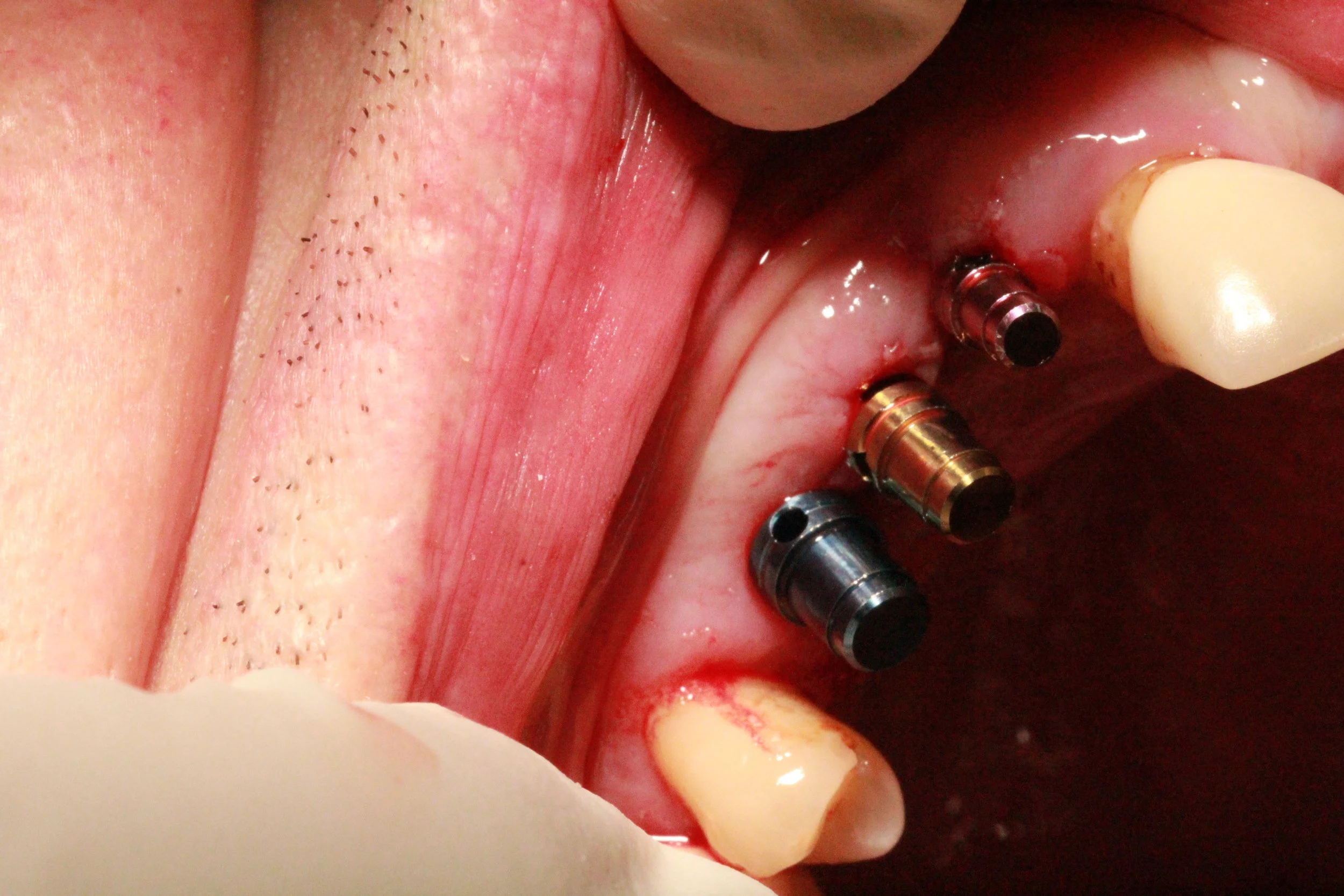
Once the pilot hole has been made then the implantologist will use drill pieces of increasing sizes to slowly made the hole bigger. This allows the implantologist to slowly increase the length and width until they are happy with the size.
During the increasing sizes a thread will be made in the bone so that the implant will be able to be screwed in easily. Some implants can be self-tapping which means that they create there own space to fit.
Once the implantologist is happy they will often place a direction indicator in the pre-made hole this is just to assess what direction that the implant will be. They may also take x-rays with drill pieces in the hole as they are going along this is to make sure that everything is going as best it can and so that they can measure accurately.
Once they are happy with the size they will then screw in the implant. The implantologist here prefers to use a little wrench a do it by hand as he feels he gets the best results that way. However, some implantologists will use a machine that measures everthing for them.
Implant Procedure Step 2 - Placing the Implant Part 1
This is the stage that the actual implant placement will take place. This can be from a week after the investigation to a few months (if there has been an extraction).
This is quite a lenghty appointment. Usually, we will book an implant for 3 hours and it takes 30 minutes to set up for the procedure. However, don't be put off by the length of time that the appointment is sometimes it can take a much shorter time it is just given to ensure there is no rush. The procedure is a very stop start procedure. This means that the implantologist will work a little then stop for a bit; possibly to take x-rays or prepare for the next stage, and then continue to work.
During the placement the Implantologist will start off by creating a space for the implant to be placed into. This means that the implantologist will begin with a pilot drill to give a starting point as to where the implant will be placed. If a surgical guide was made then this would be used to accurately place the pilot hole.

Implant Procedure Step 1 - Investigation
The initial stage for having an implant done is the investigation. This stage is where the implantologist will go through options with you, take x-rays and photographs and start to plan exactly where the implants will be placed.
During this stage sometimes the implantologist will request that you have a 'surgical guide' made. This is like a denture that is clear and has holes drilled into it. This assists the implantologist when placing the implants to improve accuracy.
They may also request that you have a CBCT scan done. This allows them to use special programs on their computers to plan and place implants. This means that they have an even better idea of the best place to insert the implant to ensure the highest success rate.