
Clinic for Implant
&
Orthodontic Dentistry, procedures explained, offers, information,
How long to wait following an extraction for a implant placement?- By Dr Amir Mostofi DDS, Dip. MSc
How long following an extraction should you wait before having an implant placement to fill the gap? In reality on the same visit you can have an implant inserted, but such approach is not always possible. The reason could be because there are not enough bone in the extraction socket to support a new implant, or severe infection in the site. However, if you wait too long following an extraction, the jaw bone in extraction socket will start shrinking and you have less bone in extraction site. Numerous studies have been carried out to find out the optimum waiting time prior to an implant placement in an extraction site. It appears that optimum time is between 8 to 12 weeks following extraction for a new implant placement.


Root canal or implant , which one is better?- By Dr Amir Mostofi DDS, Dip. MSc
Many people some times come to a point when they should choose between an option of root canal treatment or perhaps option of extraction of a tooth and later replacing the missing tooth by an implant. The question is which one is a better, more long lasting, less trouble some and cheaper option? Like many times in life there is no straight forward and easy answer to this, however, I try to out line the main differences in here.
First point that a lot patients ask me, is how long each one lost? The life span of an implant depends on many different factors but the most important factor is place in the mouth where an implant is inserted.
Many people some times come to a point when they should choose between an option of root canal treatment or perhaps option of extraction of a tooth and later replacing the missing tooth by an implant. The question is which one is a better, more long lasting, less trouble some and cheaper option? Like many times in life there is no straight forward and easy answer to this, however, I try to out line the main differences in here.
First point that a lot patients ask me, is how long each one lost? The life span of an implant depends on many different factors but the most important factor is place in the mouth where an implant is inserted. Usually implants at upper or lower front part of a mouth last longest and implants at upper molar region last less. There are several studies that shows 85% - 95% of implants survive up to 15 years. The survival rate for root canals is also dependent on a tooth position in mouth. Front teeth as they have less number of roots are more successful than molar teeth. On average 90% of root canal treatments are successful in a 15 year period.
From a cost point of view a root canal with a restoration at the top , cost less in comparative to an extraction plus implant and a crown at the top of implant.
Time wise a root canal with restoration is completed in much shorter time compare to extraction , waiting for healing period, implant insertion, waiting for implant integration with bone and later fitting a crown at the top of implant.
As a general rule my first recommendation to our patients is a root canal. However, there are cases where performing a root canal is not a good option and considering for an implant becomes a better choice.

Making Dentistry Affordable - Payment Plans
Want high quality dental treatment but are worried about the costs?
If so then look no further because we have payment plans to help suit you! We have interest free finance for those one offs either over 6 or 10 months. We also have a denplan payment plan which is a monthly payment plan for longer term planning.
Our plans are easy to sign up for and our higly trained nurses/recepton can tell you more information and guide you through the application process.
No more NHS dental treatment. You can finally afford that high quality private treatment you've always wanted. We can finance all of our treatments such as the following.
Want high quality dental treatment but are worried about the costs?
If so then look no further because we have payment plans to help suit you! We have interest free finance for those one offs either over 6 or 10 months. We also have a denplan payment plan which is a monthly payment plan for longer term planning.
Our plans are easy to sign up for and our higly trained nurses/recepton can tell you more information and guide you through the application process.
No more NHS dental treatment. You can finally afford that high quality private treatment you've always wanted. We can finance all of our treatments such as the following.
- Implants
- Dentures
- Fillings
- Crowns
- Bridges
- Teeth Whitening
- Home Visits
- Extractions
- Root Canal Treatments

Invisalign - Clear braces
What is Invisalign/clear aligners?
Aligners are thin clear flexible plastic ‘mouthguards’ which fit closely over the teeth. A series of aligners are used to move the teeth incrementally according to a treatment plan developed by the orthodontist. Aligner appliances are ideally suited to adult patients whose life-style or work commitments make it difficult for them to wear more visible conventional fixed appliances.
When can Invisalign/aligners be used?
Aligners are most commonly used in cases needing alignment of teeth without extractions. Routine aligner treatments include:
- Mild-moderate dental irregularity
- Crowding which can be corrected with mild-moderate expansion of the dental arch
- Crowding which can be corrected with reductions in tooth width (Inter-proximal reduction or slenderising)
- Mild spacing
Do I need aligners for both top and bottom teeth if I only want one straightened?
Changes in teeth crowding and spacing affect your bite, so to make sure your bite isn’t affected, our dentist likes to assess both arches and more often than not treat both arches at the same time to achieve the perfect results for your perfect smile.
How long does the treatment take?
The typical treatment length for aligners is around 5 months. The typical person will receive a series of 5 invisible aligners that need to be changed every 3 weeks or so. Some patients will receive slightly more or less aligners. This depends on the degree of teeth straightening required.
Payment Plans
We do have interest free payment plans avaliable in order to spread the cost.
In order to get urther information please visit our page for Invsalign here.

Dementia Awareness - Dementia Friendly Dental Practice
Dementia awareness among dentistry is becoming increasingly important. Therefore, we as a surgery have decided to take the necessary steps to work towards being a dementia friendly practice.
We are doing this by:
- Joining the Alzheimers Societies Dementia Awareness programme - Meaning we are Dementia Friends
- We have conducted an audit to look for any shortcomings in the way we run our practice
- We have an action plan to move foward
- We are looking into joining Worthings Dementia Action Alliance
- We have had recent training in how dementia affects people
- We will continue to update on how we have improved our practice to aid people with dementia and their carers/family members feel more comfortable while they are with us.
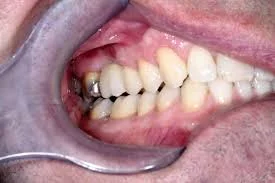
Implant Procedure - Final Step - Fitting the Crown
This is the final step of the procedure.
A few weeks after the impressions usually about 2 weeks you will be asked to come back to have the final fit of the crown. During this appointment the clinician will try in the crown or bridge that has been sent back from the laboratory. They will initially just try it in and ensure it doesn't need any major changes. If they are happy with that then they will proceed to either cement retain the crown or to screw it in to permenantly place it.
The clinician will then check the bite and ensure that you are fully happy with it. Once everyone is satisfied you will be then finished.

GDPR
As many of you are probably aware. The new GDPR regulation came into affect as of today. It means that it will affect the way that we can process any data that we have of patients. Please have a read of our Cookie Policy, Privacy Policy and Fair Processing Notice before you coninue on our website.
Thank you for you co-operation.

Implant Procedure - Step 3 - Taking Impressions
This is the stage that will begin the procedure for making the crown to finish the implant.
Firstly, the implantologist will select an impression tray that matches your personal mouth size so it is the most comfortable.
Following this, the implantologist will place a special abutment into the implant which the impression will go round and show the laboratory exactly how the implant has been placed and give them a good idea on how to make the crown.
Then, they will have their nurse mix the impression material and place it into the tray. The nurse will then pass that to the implantologist and place it into your mouth. This is uncomfortable for many patients but the best thing to do is just breathe through your nose and focus on your breathing and not whats going on.
After this, they will unscrew the abutment so that the impression comes out. They will then send this to a laboratory where they will make the crown to fit on your implant.
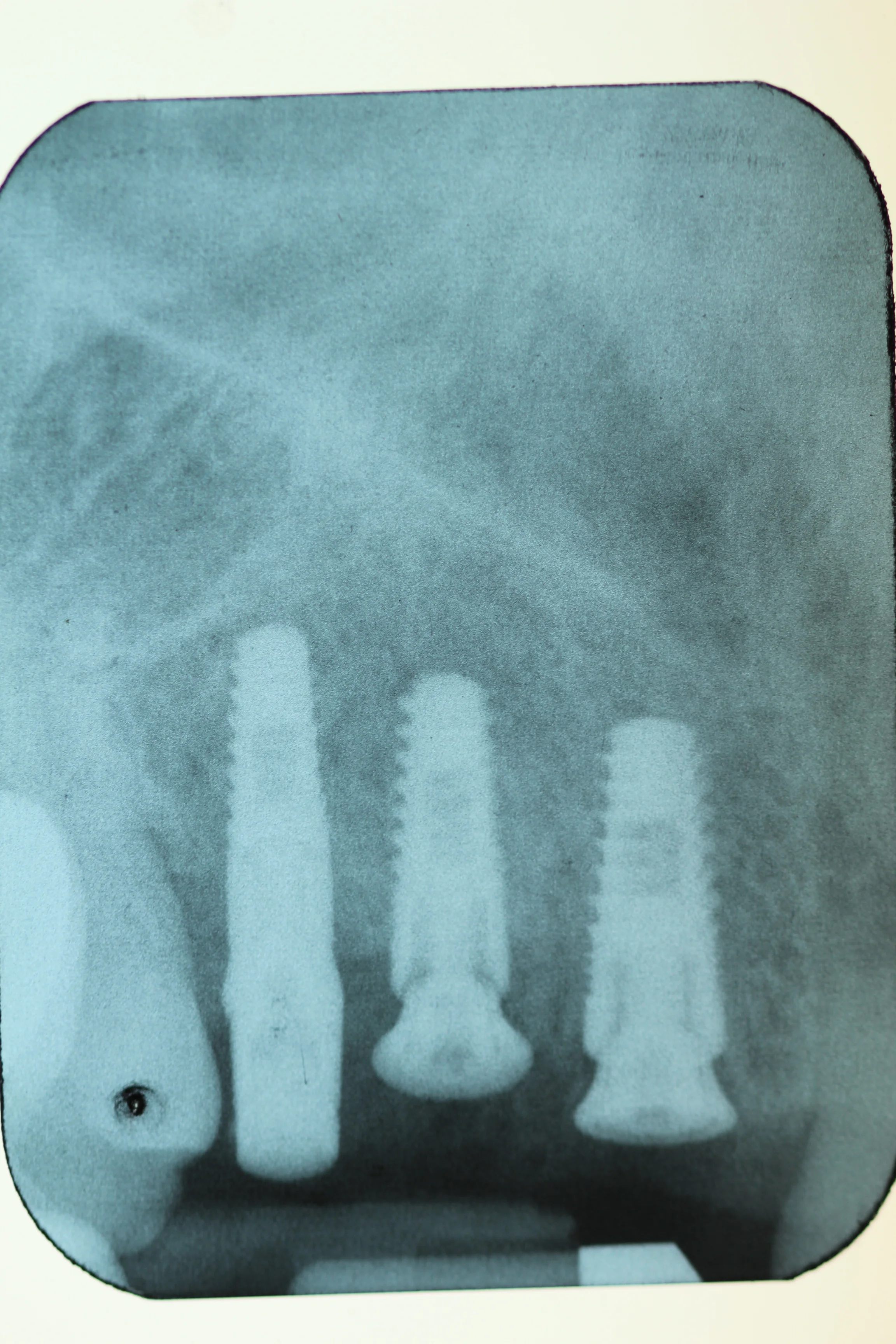
Implant Procedure Step 2 - Placing the implant - Part 2
Once the pilot hole has been made then the implantologist will use drill pieces of increasing sizes to slowly made the hole bigger. This allows the implantologist to slowly increase the length and width until they are happy with the size.
During the increasing sizes a thread will be made in the bone so that the implant will be able to be screwed in easily. Some implants can be self-tapping which means that they create there own space to fit.
Once the implantologist is happy they will often place a direction indicator in the pre-made hole this is just to assess what direction that the implant will be. They may also take x-rays with drill pieces in the hole as they are going along this is to make sure that everything is going as best it can and so that they can measure accurately.
Once they are happy with the size they will then screw in the implant. The implantologist here prefers to use a little wrench a do it by hand as he feels he gets the best results that way. However, some implantologists will use a machine that measures everthing for them.
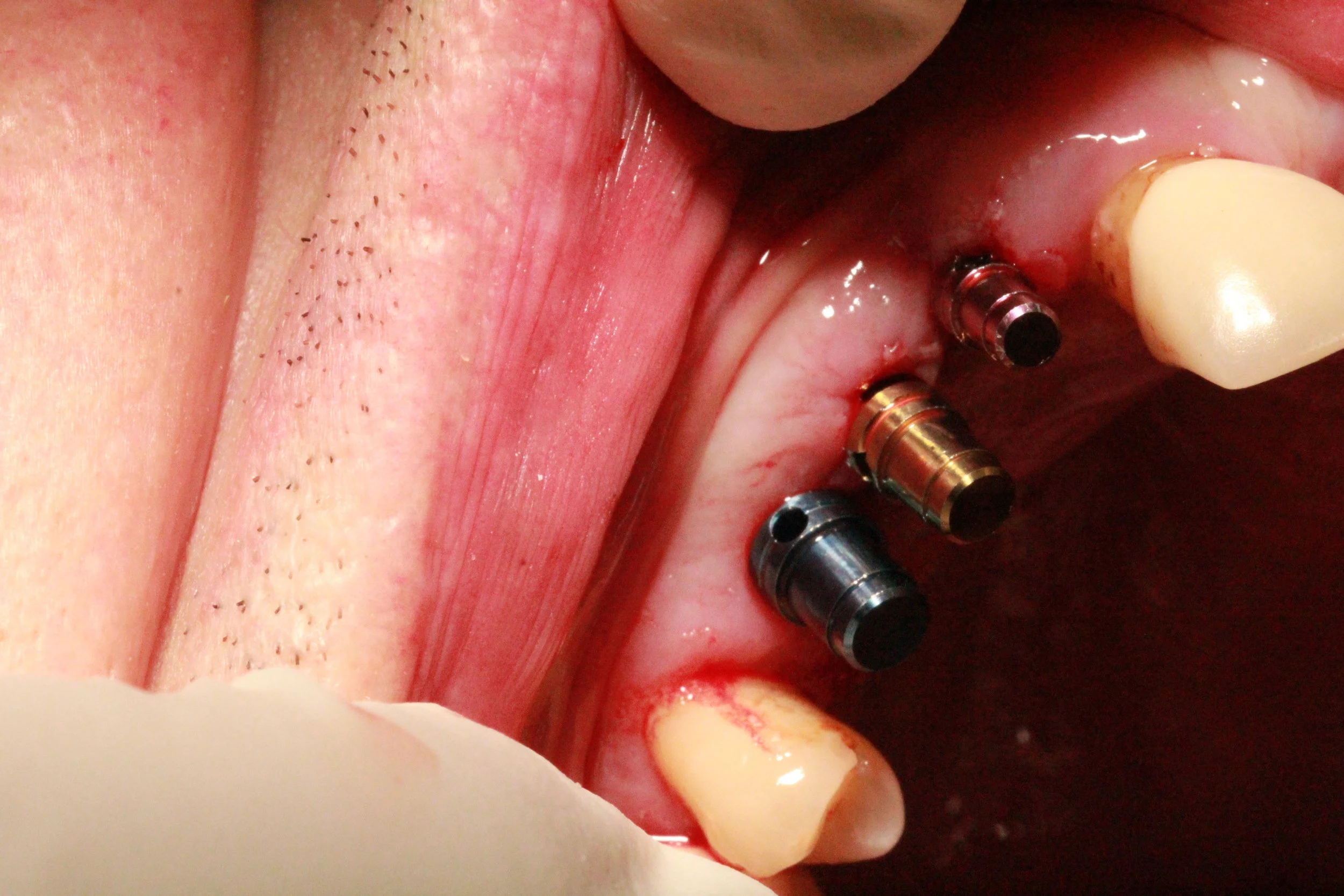
Implant Procedure Step 2 - Placing the Implant Part 1
This is the stage that the actual implant placement will take place. This can be from a week after the investigation to a few months (if there has been an extraction).
This is quite a lenghty appointment. Usually, we will book an implant for 3 hours and it takes 30 minutes to set up for the procedure. However, don't be put off by the length of time that the appointment is sometimes it can take a much shorter time it is just given to ensure there is no rush. The procedure is a very stop start procedure. This means that the implantologist will work a little then stop for a bit; possibly to take x-rays or prepare for the next stage, and then continue to work.
During the placement the Implantologist will start off by creating a space for the implant to be placed into. This means that the implantologist will begin with a pilot drill to give a starting point as to where the implant will be placed. If a surgical guide was made then this would be used to accurately place the pilot hole.

Implant Procedure Step 1 - Investigation
The initial stage for having an implant done is the investigation. This stage is where the implantologist will go through options with you, take x-rays and photographs and start to plan exactly where the implants will be placed.
During this stage sometimes the implantologist will request that you have a 'surgical guide' made. This is like a denture that is clear and has holes drilled into it. This assists the implantologist when placing the implants to improve accuracy.
They may also request that you have a CBCT scan done. This allows them to use special programs on their computers to plan and place implants. This means that they have an even better idea of the best place to insert the implant to ensure the highest success rate.
Fixed Retainers: What They Are, How Long They Last, and How to Care for Them (Worthing)
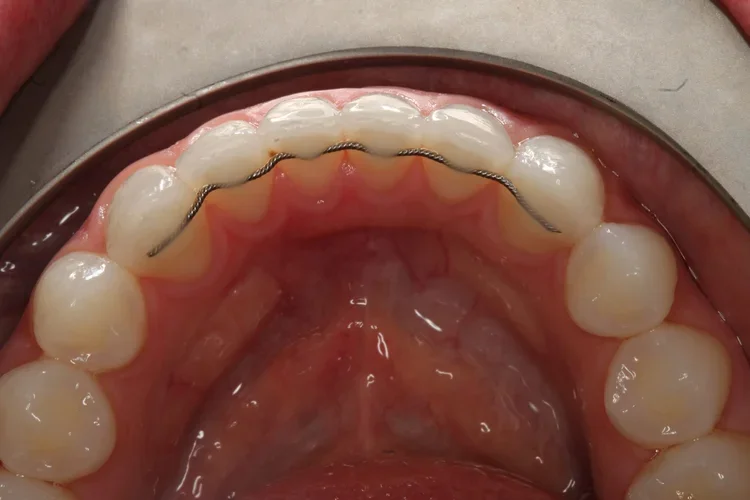
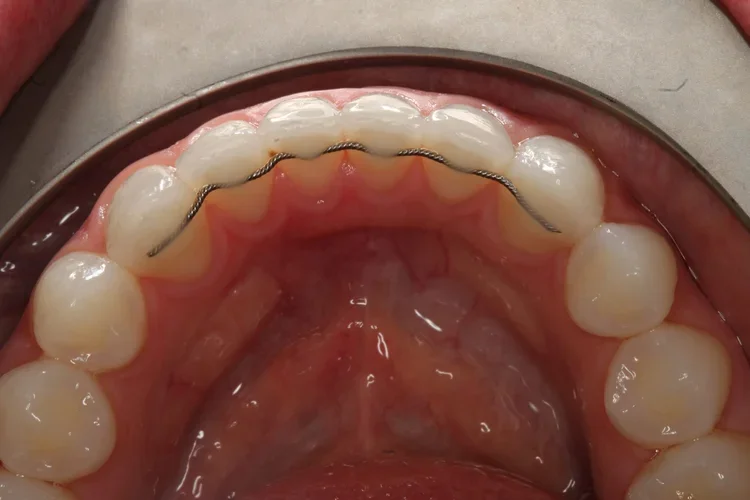
A fixed retainer (also called a bonded or permanent retainer) is a thin wire that is attached to the back of your front teeth after orthodontic treatment. Its job is simple: help stop teeth drifting back out of alignment over time.
At Clinic for Implant & Orthodontic Dentistry in Worthing, we regularly fit, repair and replace fixed retainers, and we also advise on the best long-term retention plan (often a fixed retainer plus a removable retainer at night).
Why do I need a retainer after braces?
Teeth naturally want to move throughout life. After orthodontic treatment, the fibers and bone around the teeth take time to stabilise, and even years later teeth can drift slightly.
A retainer helps maintain the result you invested in. In many cases, long-term (often indefinite) retention is recommended — especially for the lower front teeth, which commonly relapse.

An example of a fixed retainer before fitting
What is a fixed retainer?
A fixed retainer is usually a smooth wire bonded behind the front teeth (commonly canine-to-canine). It is not visible when you smile and doesn’t need to be removed.
Common types:
Straight wire bonded to several teeth
Braided wire (more flexible)
Bonded to each tooth with small composite “pads”
The best design depends on your bite, tooth shape, hygiene ability, and whether you grind your teeth.
Pros and cons of fixed retainers:
Benefits:
Works 24/7 (no forgetting to wear it)
Discreet (hidden behind the teeth)
Excellent at preventing front-tooth drift
Possible downsides:
Cleaning requires more effort (you must clean between teeth carefully)
The wire or bonding can occasionally come loose
Calculus/tartar can build up faster if cleaning isn’t thorough
With good hygiene and regular maintenance, most patients do very well with fixed retainers.
How long do fixed retainers last?
Fixed retainers can last many years, but they are not “fit and forget”. Longevity depends on:
Your bite (heavy bite can stress the wire)
Teeth grinding/clenching
Diet habits (hard foods can dislodge bonding)
Oral hygiene and professional cleaning
Some retainers last 10+ years; others need repair sooner. The key is to catch problems early.
Signs your fixed retainer needs attention
Contact us if you notice:
The wire feels sharp or “lifted”
One part is loose, even slightly
A tooth feels like it’s starting to move
Floss keeps shredding or getting stuck
You can see the bonding has chipped or cracked
A small issue is usually quick to fix. Leaving it can allow teeth to drift.
How to clean around a fixed retainer?
Good cleaning is essential to prevent gum inflammation and tartar build-up.
Daily tips
Brush twice daily with fluoride toothpaste
Use interdental brushes (often the easiest option)
Use superfloss or a floss threader to clean under the wire
Consider a water flosser as an extra tool (not a replacement for brushing)
Professional hygiene
If you have a fixed retainer, regular hygiene appointments help keep the gumline healthy and reduce tartar around the wire.
Fixed retainer repair: what happens?
If a retainer comes loose, we first check:
Which tooth/teeth are affected
Whether any teeth have already shifted
Your bite, to reduce the risk of repeat breakage
Repair options
Re-bond the loose section (common and quick)
Replace the wire if it’s distorted or repeatedly failing
Adjust the retainer design if bite forces are causing issues
If teeth have moved, we’ll discuss the best way to regain alignment (sometimes minor orthodontic refinement is needed, but often it can be avoided if caught early).
Frequently asked questions:
Can a fixed retainer break without me noticing? Yes. Sometimes a small bond fails but the wire stays in place. That’s why regular checks (and paying attention to flossing changes) are important.
Should I still wear a removable retainer? Often, yes — especially at night. Many orthodontic plans use both for the most stable long-term result.
Does removing a fixed retainer hurt? No. Removal is usually straightforward and we clean/polish the tooth surface afterwards.
What foods should I avoid? Very hard foods (biting into crusty bread, nuts, ice, hard sweets) can increase the chance of breakage.
Can I have a fixed retainer if I grind my teeth? Yes, but you may also need a night guard, and we may recommend a retainer design that tolerates higher forces.
Book a retainer check or repair in Worthing
If your fixed retainer is loose, uncomfortable, or you’re worried your teeth are moving, contact Clinic for Implant & Orthodontic Dentistry in Worthing. We can assess the retainer, advise on the best retention plan, and repair or replace it where needed.
Essix Retainers
These have the same function as the Hawley retainer to ensure the treatment of braces in not reversed after they are removed.
However, these are usually favoured due to them being made of a clear plastic and are more aesthetically pleasing.
They also cover the entire arch of the teeth not just portions like other retainers.
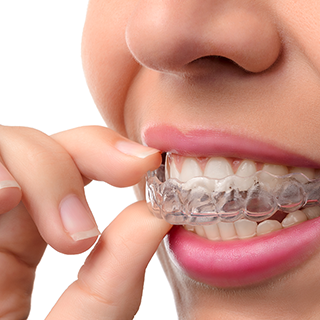
An example of an Essix retainer
Hawley Retainers
The first that I would like to have a look at is the Hawley retainer.
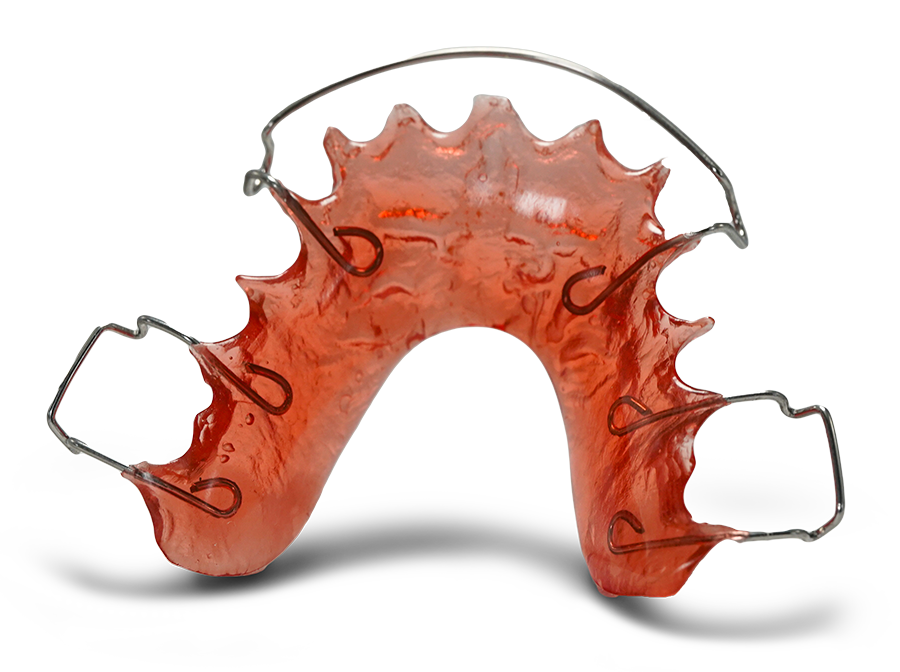
This retainer is the most well-known retainer. They are usually made of an acrylic base with a bendable wire that will surround the front teeth to correct them.
It was named after its inventor Dr Charles A. Hawley.
It is used to ‘tweak your teeth and keep them in place so the procedure is not reversed after braces have been removed.

An example of a Hawley retainer
Orthodontic Retainers: Types, How Long to Wear Them, and How to Care for Them (Worthing)
After braces or clear aligners, a retainer is what keeps your teeth in their new position. Teeth can drift throughout life, and retention is the reason your orthodontic result stays stable long-term. At Clinic for Implant & Orthodontic Dentistry in Worthing, we provide retainer fitting, replacement and repair, and we advise on a retention plan that suits your bite, lifestyle and oral hygiene. In many cases, long-term (often indefinite) retainer wear is recommended.
Why are retainers so important?
Once teeth have been moved, the surrounding fibres and bone need time to stabilise. Even after that, teeth can still shift due to:
Natural ageing changes
Bite forces and chewing patterns
Teeth grinding/clenching
Wisdom tooth pressure (in some cases)
Gum disease or bone loss
A retainer helps prevent relapse and protects the time and money you invested in orthodontic treatment.
Types of orthodontic retainers:
1) Clear removable retainers (Essix / Vivera-style)
These are thin, clear plastic retainers that fit over the teeth.
Pros
Very discreet
Comfortable for many patients
Good at holding alignment when worn consistently
Cons
Can crack or wear over time
Can distort with heat (never use hot water)
Can be lost if wrapped in tissue/left in pockets
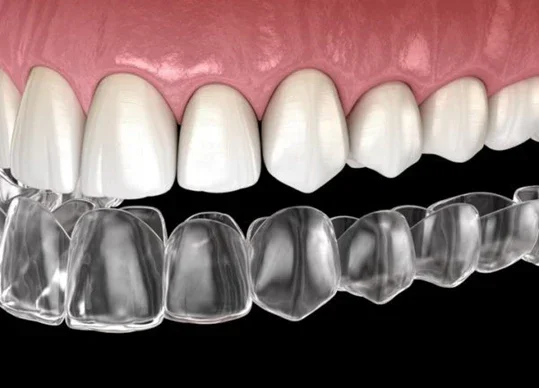
Essix retainer , Removable clear retainer
2) Hawley retainers (acrylic + wire)
A traditional removable retainer with an acrylic base and a front wire.
Pros
Durable and adjustable
Some patients find they last longer than clear retainers
Easier to repair in certain situations
Cons
More visible than clear retainers
Can feel bulkier at first
3) Fixed retainers (bonded retainers)
A wire bonded behind the front teeth (commonly canine-to-canine).
Pros
Works 24/7 (no forgetting)
Hidden behind the teeth
Excellent for preventing front tooth relapse
Cons
Requires careful cleaning
Can occasionally debond or break
Needs monitoring at check-ups
Many patients have a combination: fixed retainer + removable retainer at night.
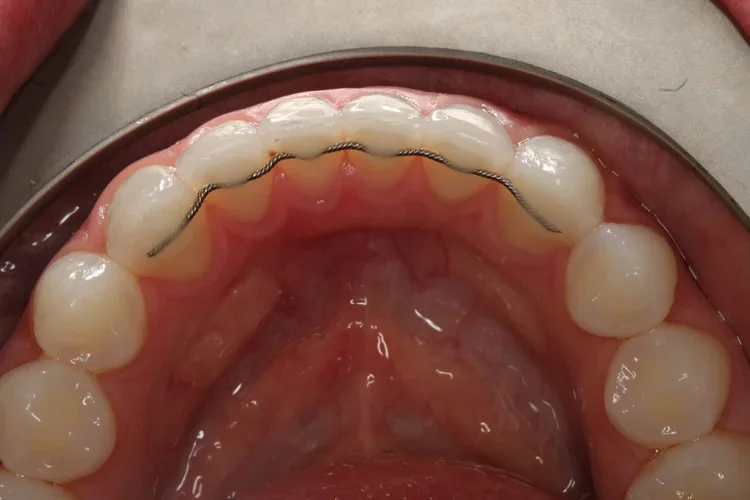
Fixed Retainer
How long do I need to wear my retainer?
Retention is very individual, but a common approach is:
Immediately after treatment
Often full-time wear for a period (e.g., 2–3 months), removing only for meals and cleaning (follow your clinician’s plan).
Long-term
Usually night-time wear indefinitely (for removable retainers).
If you stop wearing retainers completely, even years later, teeth can move.
If you’re unsure what your plan should be, we can assess your bite and advise a realistic long-term schedule.
Signs your retainer needs attention
Contact us if:
Your retainer feels tight or doesn’t fit (early sign of tooth movement)
A fixed retainer feels sharp or partially loose
Your clear retainer is cracked, worn, or has rough edges
You’ve lost your retainer
Teeth are visibly drifting or contacts feel different
Early action usually prevents bigger relapse.
How to clean retainers properly:
Cleaning clear retainers
Rinse with cool water after removal
Brush gently with a soft toothbrush (no abrasive toothpaste)
Use retainer cleaning tablets occasionally (follow instructions)
Avoid hot water (heat can warp the plastic)
Cleaning Hawley retainers
Brush daily with a soft brush and mild soap
Avoid soaking in very hot water
Keep away from pets (they often chew retainers)
Cleaning around a fixed retainer
Brush twice daily with fluoride toothpaste
Use inter dental brushes and/or super floss under the wire
Consider a water floss as an additional tool
Regular hygiene visits help reduce tartar around the wire
Retainer replacement and repair in Worthing , If you lose a removable retainer
We can usually make a replacement. The sooner you replace it, the less chance of teeth shifting.
If a fixed retainer comes loose
We’ll check:
Which teeth are affected
Whether any movement has already started
Your bite, to reduce repeat breakage
Options include re-bonding, replacing the wire, or adjusting the design if bite forces are contributing.
If your retainer no longer fits
This can mean teeth have already moved. Depending on the amount of movement, we may be able to:
Remake the retainer if alignment is still acceptable
Provide short-term orthodontic refinement if relapse is more significant
Frequently asked questions
Can I switch from a fixed retainer to a removable retainer (or vice versa)? Often yes. It depends on your bite, hygiene, and relapse risk. We can advise after an assessment.
Do I need retainers after Invisalign/clear aligners? Yes — retention is essential after aligners, just like braces.
How many retainers should I have? Many patients choose a spare removable retainer to reduce risk if one is lost or broken.
Can retainers cause bad breath? They can if not cleaned properly. Daily cleaning and regular dental hygiene solves most issues.
I grind my teeth — will that damage my retainer? Grinding can wear clear retainers faster and stress fixed retainers. A night guard may be recommended in some cases.
Book a retainer check, repair or replacement
If you need a new retainer, your fixed retainer is loose, or you’re worried your teeth are moving, contact Clinic for Implant & Orthodontic Dentistry in Worthing. We’ll assess your retention needs and advise on the most stable long-term plan.